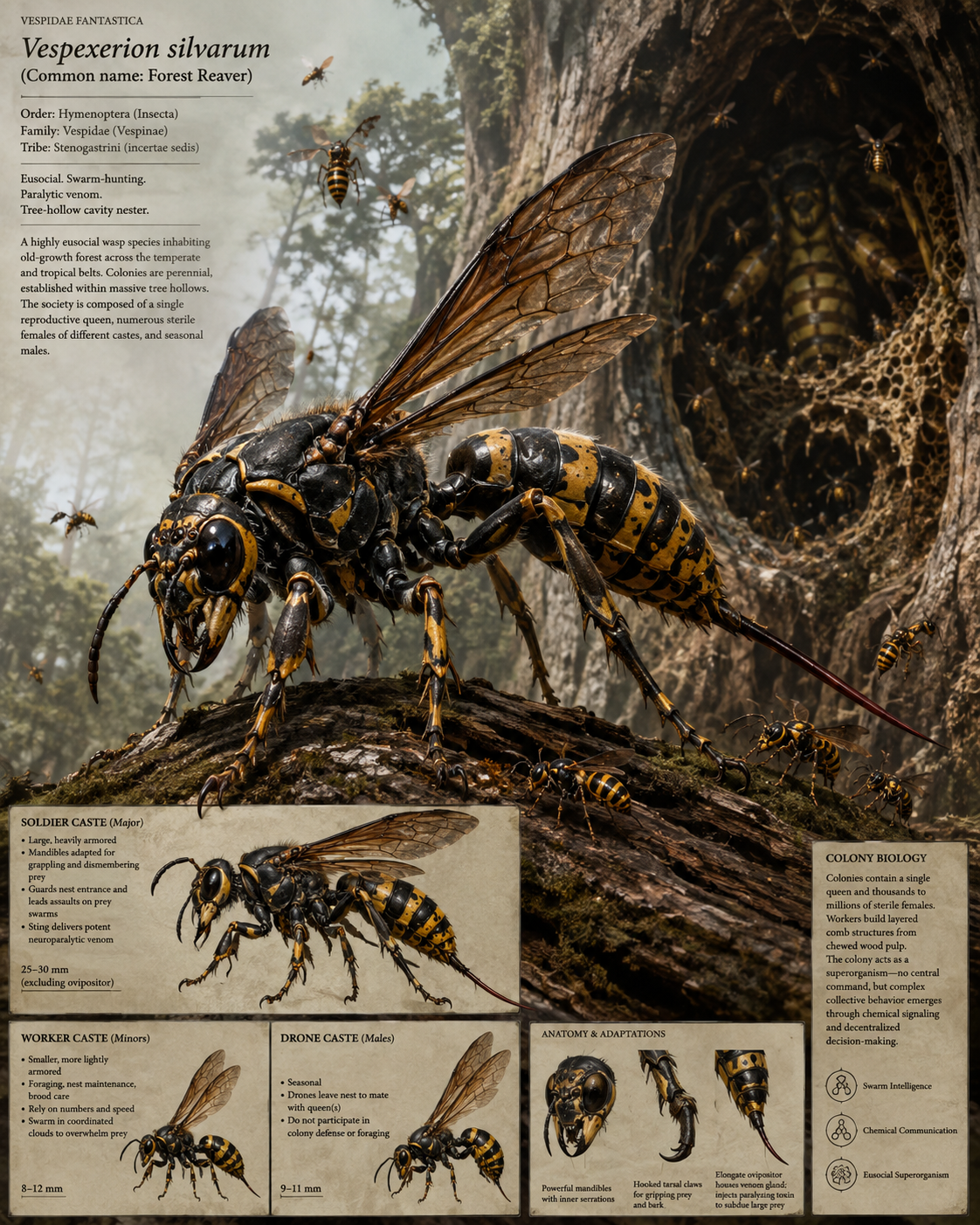
In one sentence: Vespoid is a small wasp-like Neopteron (Monster Hunter's insect-type class) that has swarmed through the series since 2004, stinging prey with a paralytic venom — and, in canon, living in a eusocial colony of foragers and soldiers ruled by a Vespoid Queen.
After five monsters built on spiders and a mantis, here is a true insect — six legs, two pairs of wings, a sting — and it carries the single deepest puzzle in all of biology on its back. A colony of wasps is full of females who will never reproduce, working and dying to raise someone else's young. Darwin himself called sterile castes a "special difficulty... actually fatal to my whole theory." It wasn't fatal — but the answer took a century, and the most famous version of that answer turns out to be wrong. Vespoid is the monster that lets me tell you which part of the textbook to keep and which to throw out.
Tagging each claim.
Canon. Vespoid is a Neopteron — the series' insect-type class (a chitinous, six-limbed body, often winged) — and it has appeared since the original Monster Hunter (2004) through Monster Hunter Wilds. It is small, frail, flies in swarms, and stings with a paralytic venom from an abdominal stinger. Eusociality is canon at the species level through a separate monster, the Vespoid Queen: the lore describes a queen with sterile soldier and forager castes, a nest built inside a giant tree, year-round egg-laying, and colonies of hundreds to thousands, with satellite groups in hollows and caves. Note the nuance: in an ordinary hunt you only meet the swarming soldiers — the colony structure is established by the Queen's lore, not something you watch in a single fight.
What is inference, not stated. The "wasp" reading comes from the English name and the design, not from canon text: the Japanese name is ランゴスタ (rangosuta, from langosta, "locust"), and no developer source names a real species. So "modeled on social wasps (Vespidae)" is a well-supported inference, and I'll treat all real-wasp biology as analogy, not as the monster's confirmed mechanism. (One housekeeping correction the wikis get muddled: Vespoid's relative Hornetaur is beetle/cricket-like, not ant-like — different creature, don't conflate.)
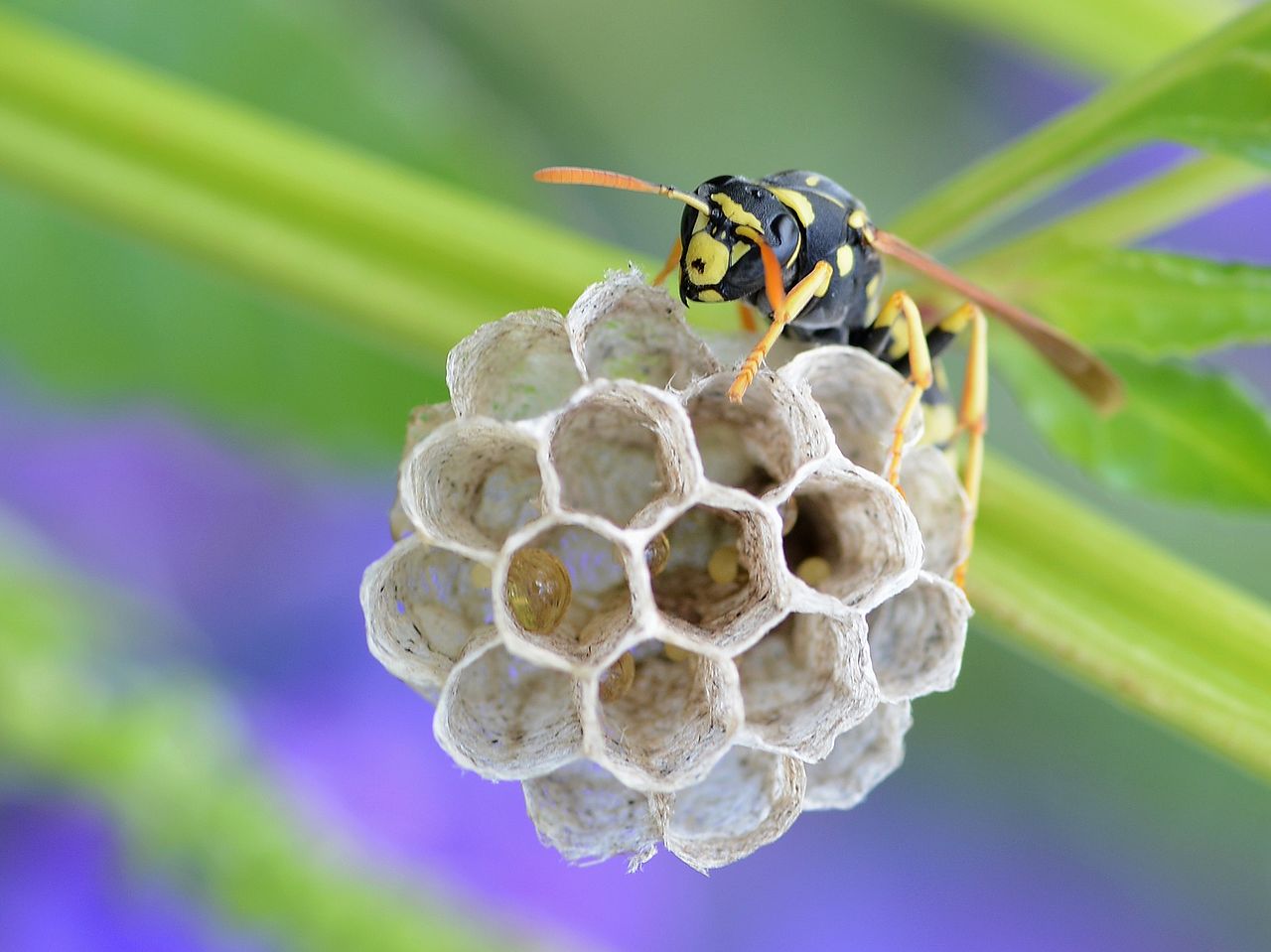
I work on warning coloration and mimicry, and a wasp is the textbook case — the black-and-yellow is one of the most copied signals on Earth. But the richer hook is evolutionary: the sterile worker is the problem that built modern social evolution, and the famous "haplodiploidy" explanation for it is exactly the kind of beautiful-but-wrong idea I think a science writer owes it to readers to correct. So I'll do the coloration, then the harder thing.
Why would an animal give up reproducing entirely to raise another's offspring? The answer is kin selection, and it is one of the great ideas in biology. W.D. Hamilton showed in 1964 that a gene for helping can spread if rB > C — if the relatedness (r) to those you help, times the benefit (B) you give them, exceeds the cost (C) to your own reproduction (Hamilton 1964). A worker wasp that never lays an egg can still pass on her genes by helping her mother produce hundreds of siblings who carry copies of them. The "paradox" of the sterile caste dissolves into accounting: she is reproducing, just indirectly.
A Vespoid colony — a queen plus sterile soldiers and foragers — is a textbook eusocial society (reproductive division of labor, overlapping generations, cooperative brood care). The game never states a genetic mechanism, so this is analogy; but it is the right analogy, and it is the most interesting one in the franchise. (For honesty: the theory has live debate — Nowak, Tarnita & Wilson argued in 2010 that eusociality could evolve without inclusive-fitness bookkeeping, and 137 biologists rebutted them in 2011; inclusive fitness remains the mainstream framework.)
Here is the part most articles get backwards, and where I can earn your trust by correcting the textbook.
Wasps, bees and ants are haplodiploid: males hatch from unfertilized eggs and are haploid; females are diploid. Hamilton noticed a lovely consequence — if a queen mates once, her daughters share three-quarters of their genes with each other (r = 3/4), but would share only half with their own offspring (r = 1/2). So, the story goes, a female is better off raising sisters than daughters, which predisposes haplodiploid insects to evolve sterile worker sisters. This "haplodiploidy hypothesis" is in every textbook.
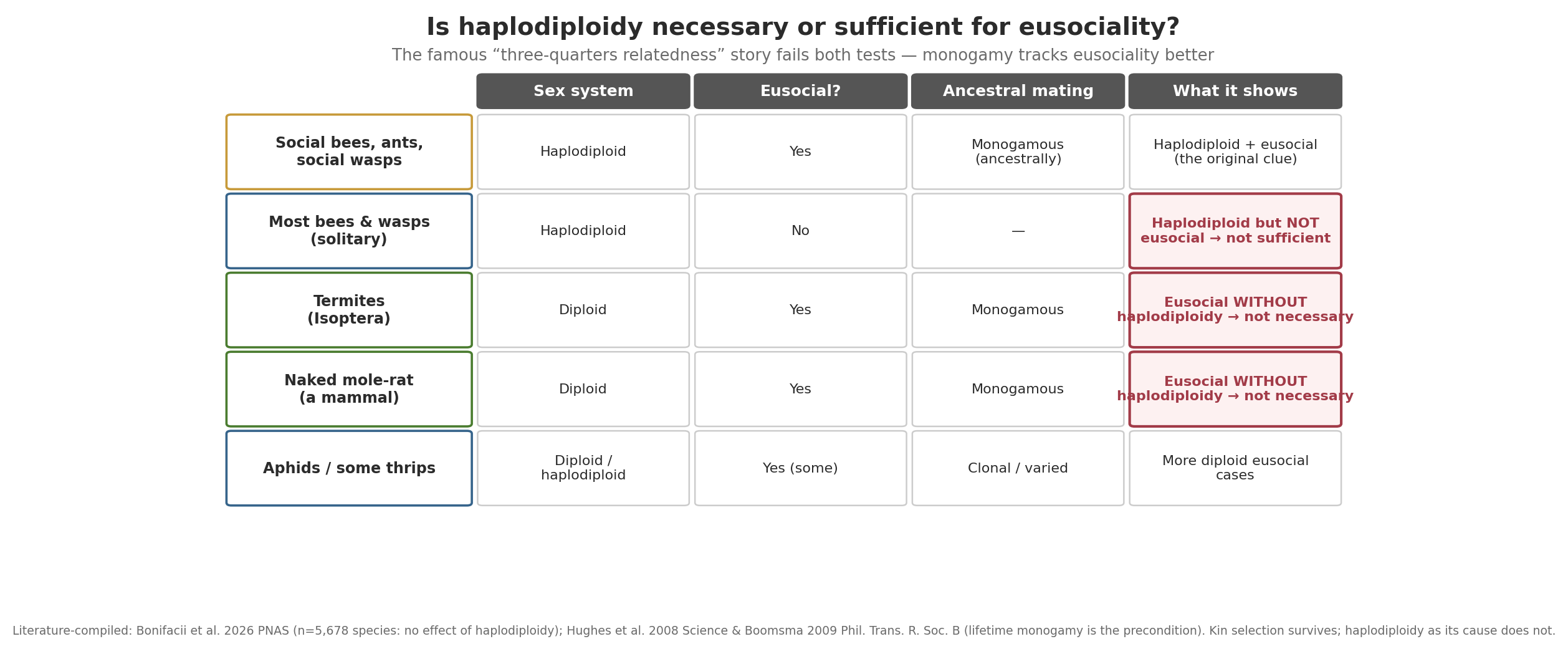
It is also, as a driver, wrong — and saying so is the point of this piece. Three problems sink it. First, a female is equally related (r = 1/2) to her brothers and her own offspring, and averaged across brothers (r = 1/4) and sisters (r = 3/4) her relatedness to siblings is just 1/2, the same as a diploid animal. Second, eusociality evolved in fully diploid termites and even in a diploid mammal, the naked mole-rat — no haplodiploidy required. Third, and decisively, a 2026 phylogenetic analysis of 5,678 insect species found no evidence that haplodiploidy raises the rate at which eusociality evolves; the old correlation was an artifact of high transition rates within Hymenoptera specifically (Bonifacii et al. 2026). What actually predicts eusociality is lifetime monogamy — a singly-mated mother makes all her offspring full siblings, which is what makes helping pay (Hughes et al. 2008; Boomsma 2009).
So the honest summary is precise: kin selection survives, and explains the sterile Vespoid soldier beautifully; haplodiploidy as its cause does not. If you have only ever heard the "three-quarters relatedness" story, this is the update.
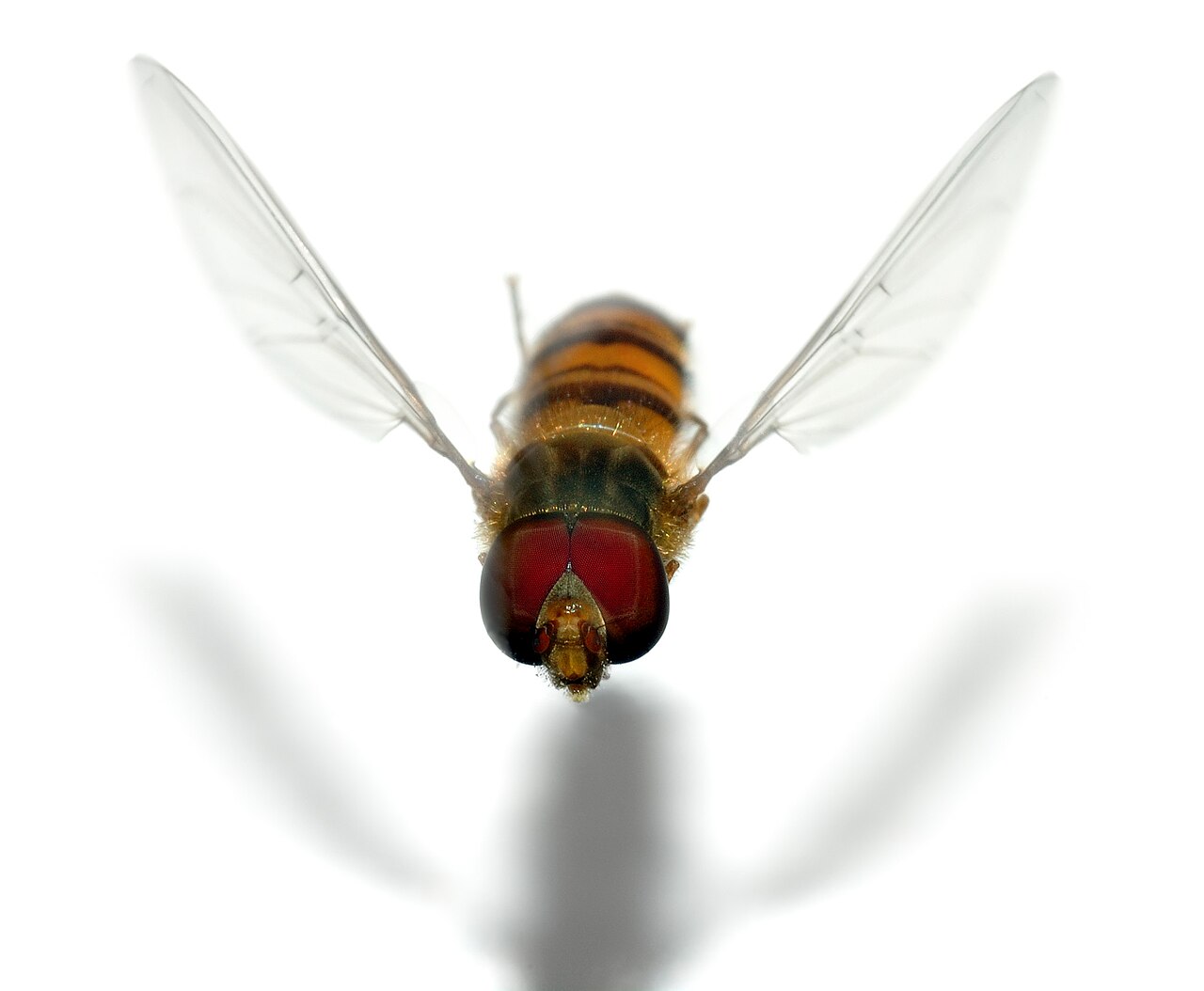
Now my home turf. A wasp's banding is aposematism — a conspicuous, honest signal that the bearer is defended (it stings), which visually hunting predators like birds learn to avoid. Because many co-occurring stinging species share the same black-and-yellow, they form Müllerian mimicry rings: mutually honest mimics that pool the cost of teaching naive predators a single "do not eat" pattern. A 2023 synthesis counted more than 100 such rings spanning roughly 1,000 species across 19 families of stinging Hymenoptera worldwide (Chatelain et al. 2023). This is distinct from Batesian mimicry, where an undefended cheat — a harmless hoverfly — imitates the wasp without paying for a sting. Vespoid's warning colors are, biologically, a membership badge in one of the planet's largest honest-signaling clubs.
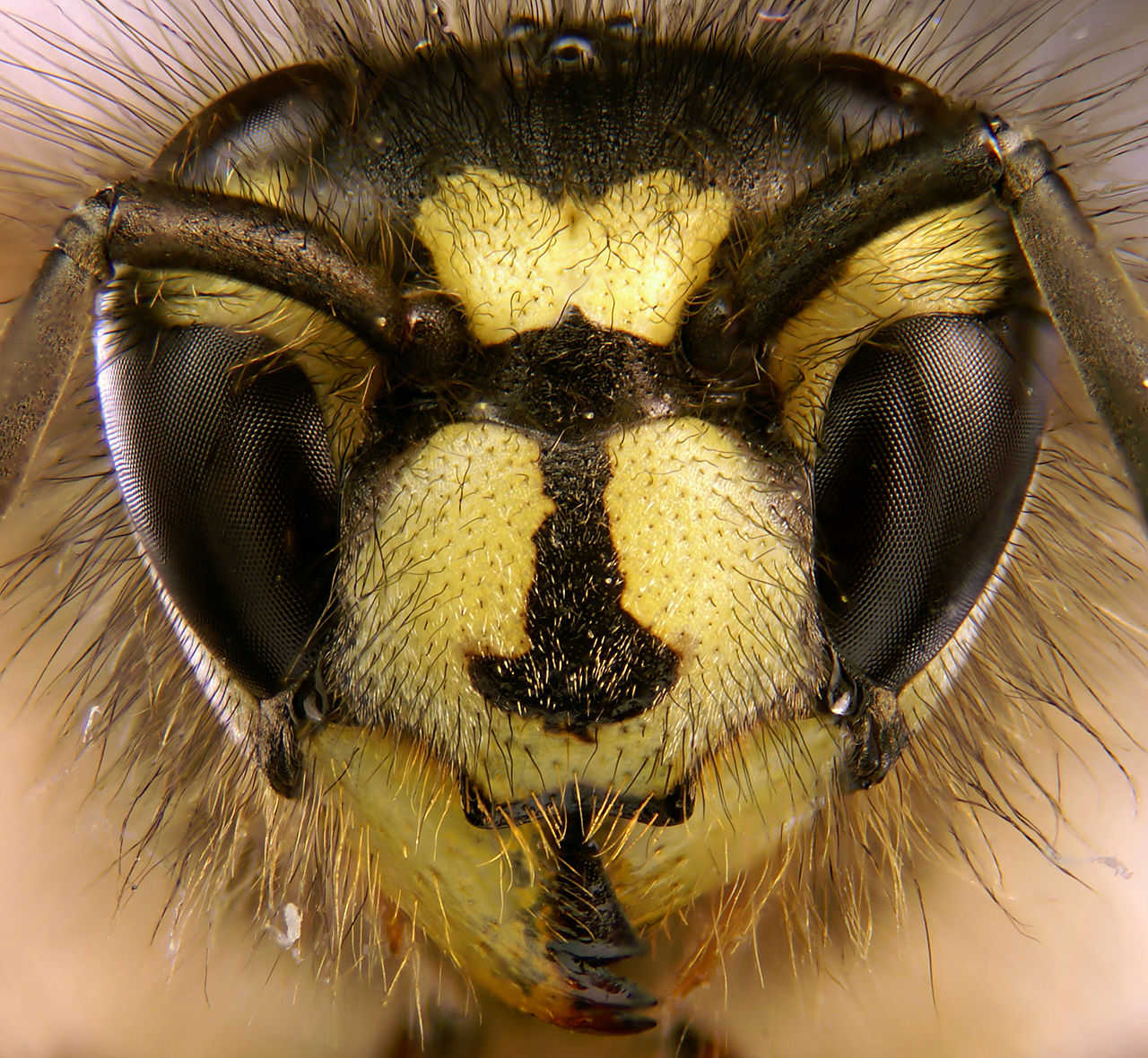
Vespoid's weapon is a paralytic sting, and the real chemistry is specific. A wasp's sting is a modified ovipositor — an egg-laying tube turned into a weapon — which is why only females sting. Social-wasp venom is dominated by mastoparans (small membrane-active peptides that make mast cells dump histamine, causing the pain and swelling), plus kinins, phospholipase A2, and hyaluronidase, the "spreading factor." But true paralysis as a hunting tool is the specialty of solitary hunting wasps, which sting prey precisely in the nerve centers to immobilize a living larder for their young — the emerald cockroach wasp even delivers a brain sting that turns a roach into a docile walking food supply. That targeted paralysis is a closer match to Vespoid's in-game effect than a social wasp's defensive sting; the status is canon, the molecules are my analogy.
Explicitly speculative — a hypothesis from known mechanisms. Unusually for this series, almost every step here is real.
So Vespoid is the most biologically grounded monster in this series: four of five steps describe real wasps, and only the top-down "command" is fiction. The swarm is real; the general is not.
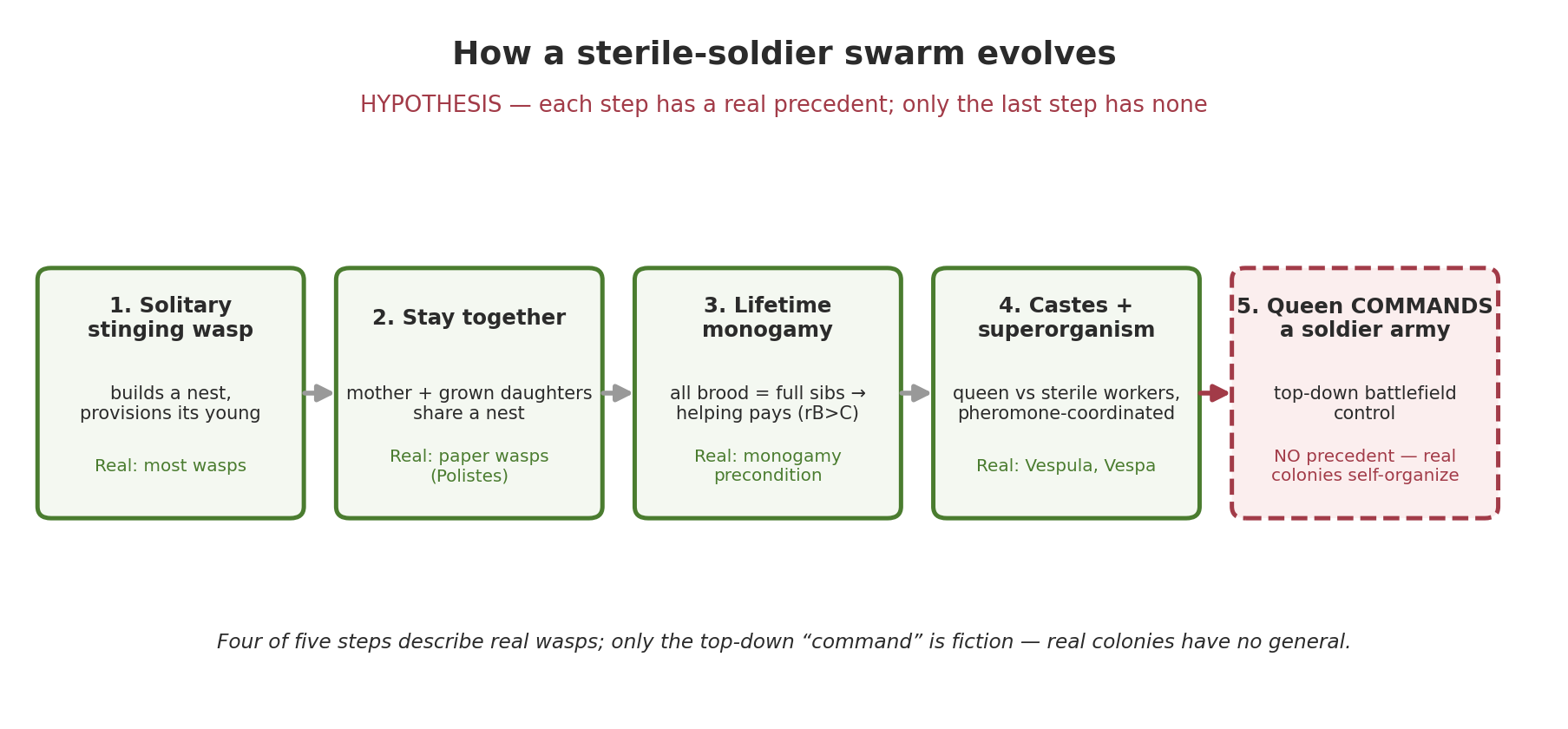
Speculative, each from a general rule in social wasps.
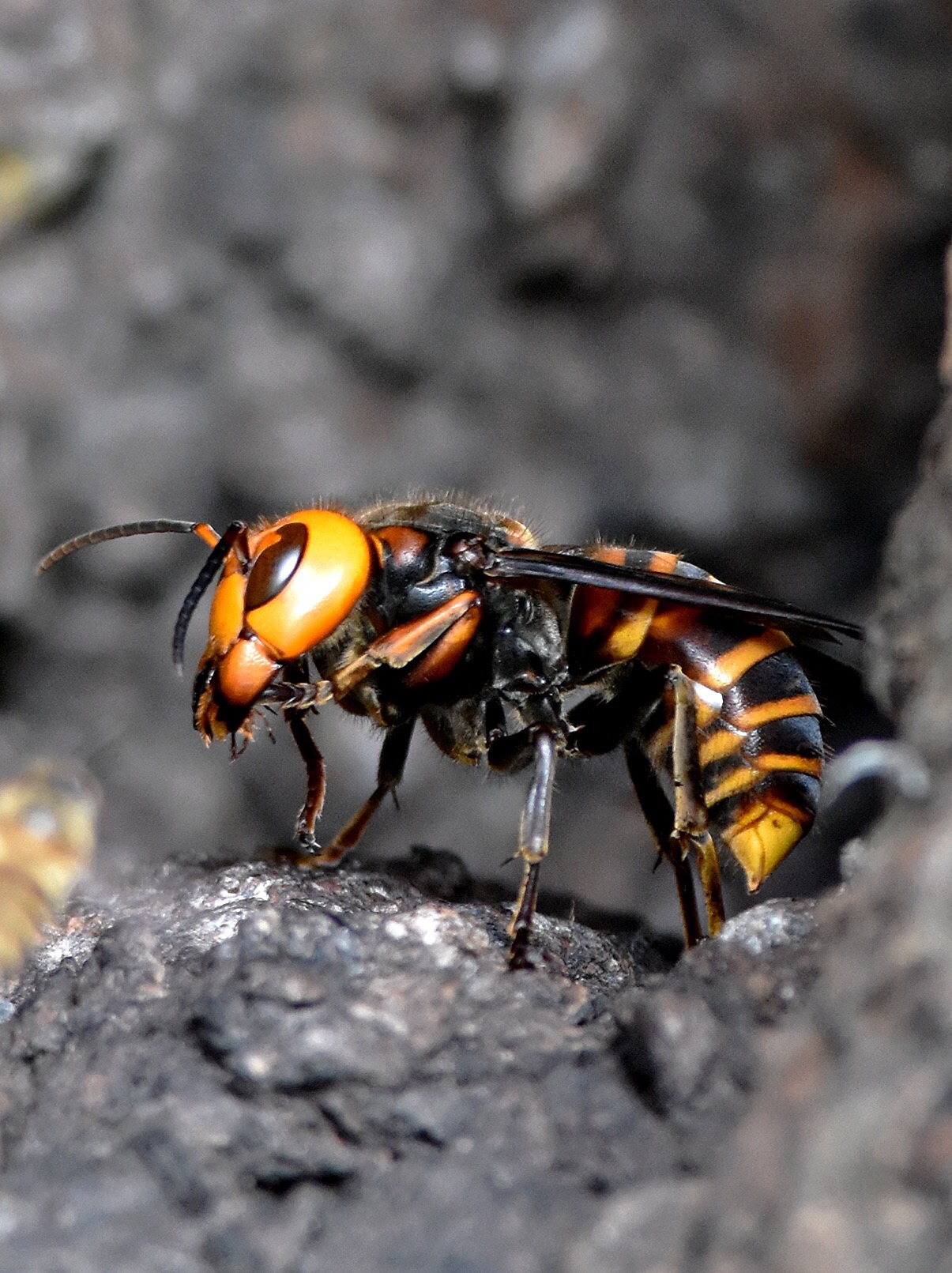
The closest real animal to a Vespoid swarm-predator is the northern giant hornet (Vespa mandarinia) — the world's largest hornet, sensationalized as the "murder hornet." It is a specialist that can annihilate a honeybee colony in roughly ninety minutes. When it turned up in North America (Washington State and British Columbia) in 2019, it threatened naive European honeybees with no defense against it. The response is one of the rare insect-eradication success stories: four nests were found and destroyed by 2021, and after three years with no detections, US agencies declared the northern giant hornet eradicated from the United States on 18 December 2024.
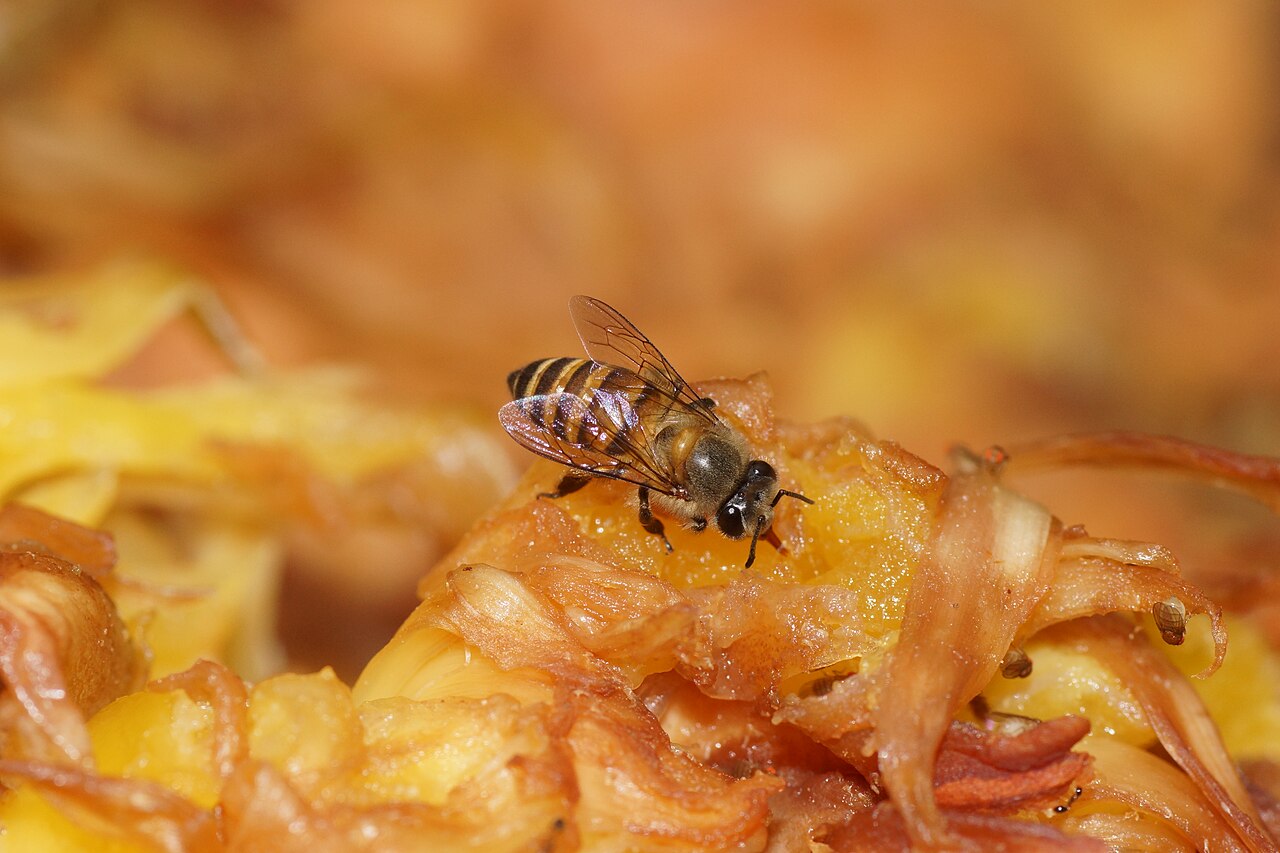
And the co-evolutionary contrast is exactly my field. European honeybees (Apis mellifera) are defenseless against the hornet; the Asian honeybee (Apis cerana), which evolved alongside it, fights back — famously by "heat-balling" a scout (mobbing it into a ball and cooking it with muscle heat) and even by smearing animal dung at the nest entrance to deter attacks (Mattila et al. 2020). Naive prey gets slaughtered; co-evolved prey has answers. That is the real story a Vespoid invasion would tell.
The figures in this piece are built like the earlier ones in the series: original, citable, and explicit about fact versus reasoned speculation. Figure 1 compares Hymenoptera (eusocial versus the many solitary haplodiploid bees and wasps), termites, the naked mole-rat, and aphids/thrips, scored by sex-determination system, eusociality, and ancestral mating system — showing that haplodiploidy is neither necessary nor sufficient, and that lifetime monogamy tracks eusociality better (Bonifacii et al. 2026; Hughes et al. 2008; Boomsma 2009). Figure 2 lays out the five-step evolutionary scenario above, each step tagged with its real precedent and the final "queen commands the army" step flagged as the break from biology. And the concept plate above is an AI-generated, explicitly hypothetical reconstruction of the plausible real animal behind Vespoid — an original creature, not the game monster.
What Capcom got right, and unusually fully: a stinging, swarming, eusocial insect with a queen, sterile soldier and forager castes, and colonies in the thousands — every piece of which is real wasp biology. After five monsters that spliced in something impossible, Vespoid barely needs a fiction asterisk.
Where they bent it: the queen as a battlefield commander. Real colonies have no commander; they are self-organized by chemistry. And the textbook reason for the sterile castes — haplodiploid three-quarters relatedness — is itself a myth the science has now retired.
The real cast is easy to meet, and worth respecting. A paper-wasp nest under your eaves is an incipient superorganism. The black-and-yellow on it is honest advertising in a thousand-species mimicry ring. And the giant hornet that the United States just spent five years hunting to local extinction is what a Vespoid swarm would really look like meeting a defenseless ecosystem.
A social wasp. Vespoid is a Neopteron (Monster Hunter's insect-type class) and is a true insect — six legs, two pairs of wings, a sting. The "wasp" reading comes from the English name and design rather than canon text (its Japanese name, ランゴスタ, derives from "langosta"/locust), so real-wasp biology is best treated as analogy.
Kin selection. Under Hamilton's rule (rB > C), a gene for helping spreads when relatedness times the benefit exceeds the cost. A sterile worker still passes on her genes by helping her mother raise hundreds of siblings who carry copies of them — she reproduces indirectly (Hamilton 1964).
No, not as a driver. Averaged across brothers (r = 1/4) and sisters (r = 3/4), a female's relatedness to siblings is 1/2, the same as a diploid animal; eusociality also evolved in diploid termites and the naked mole-rat. A 2026 phylogenetic analysis of 5,678 insect species found no effect of haplodiploidy on eusociality's evolution (Bonifacii et al. 2026). Kin selection survives; haplodiploidy as its cause does not.
Aposematism — an honest warning that the bearer can sting. Many co-occurring stinging species share the pattern, forming Müllerian mimicry rings; a 2023 synthesis counted more than 100 rings spanning about 1,000 species across 19 families of stinging Hymenoptera (Chatelain et al. 2023).
The northern giant hornet (Vespa mandarinia) was first detected in Washington State and British Columbia in 2019. Four nests were found and destroyed by 2021, and after three years with no detections, US agencies declared it eradicated from the United States on 18 December 2024.


.jpg)

